

AI for recruitment and HR
Screening with reasons attached, with the ATS integration scoped at the audit and the recruiter making every call.
What AI can do while a role is live
AI earns its place in hiring on the work that repeats every day: reading the overnight applications against the brief, writing up interview notes the same way for every candidate, chasing the right-to-work documents, and keeping candidates and hiring managers updated while a role is live.
How we engage with hiring teams
Most engagements start with the AI Audit, with scope and fee agreed before the work starts. Some teams then continue with an AI Implementation engagement to deliver the roadmap, while others commission a bespoke build.
- AI Audit We measure where the morning goes and hand back:
- Executive summary
- Interview and findings report
- Implementation roadmap and training plan
- Costing and benefit assessment
- AI Implementation We implement the priorities you agree inside a defined delivery allocation, building the plan into the week and training the recruiters who make every call. from £5,000 a month
- AI Charter It writes down what AI is used for in hiring, what stays with a person and who owns each workflow. optional, +£3,000
Implementing the plan is a separate decision. What goes live is measured against the mornings the audit counted.
Where firms like yours start
It reads the overnight applications against the brief and names the reason beside every candidate it shortlists.
It writes up the notes against the same questions for every candidate, filed before the next call.
It checks the compliance documents against your checklist, flags what is missing and assembles the file.
It keeps candidates and hiring managers updated while a role is live, so nobody chases a reply.
It sits on the ATS you already run. Scoped at the audit.
Your recruiters reach the first call with the overnight pile cleared, and a reason recorded beside every name. A candidate’s history is quick to pull up.
The audit works out yours.
Related work
Both sides of one hiring platform, in production, where every match arrives with the reasoning behind it and nobody is contacted uninvited.
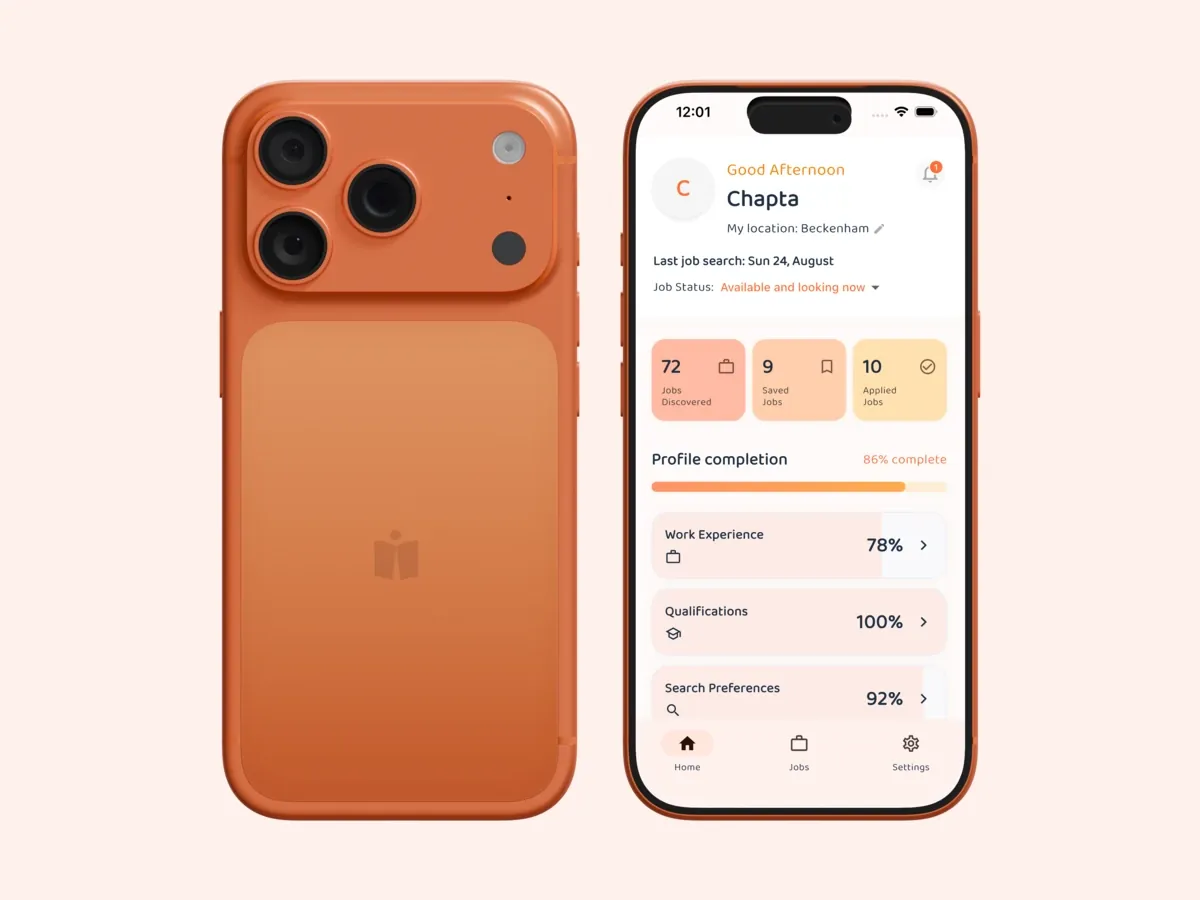 Chapta Replacing the CV with a conversation A candidate arrives with their own account of what they can do, and sees why they match a role before either side makes contact. 8–12 Skills drawn out in one conversation
 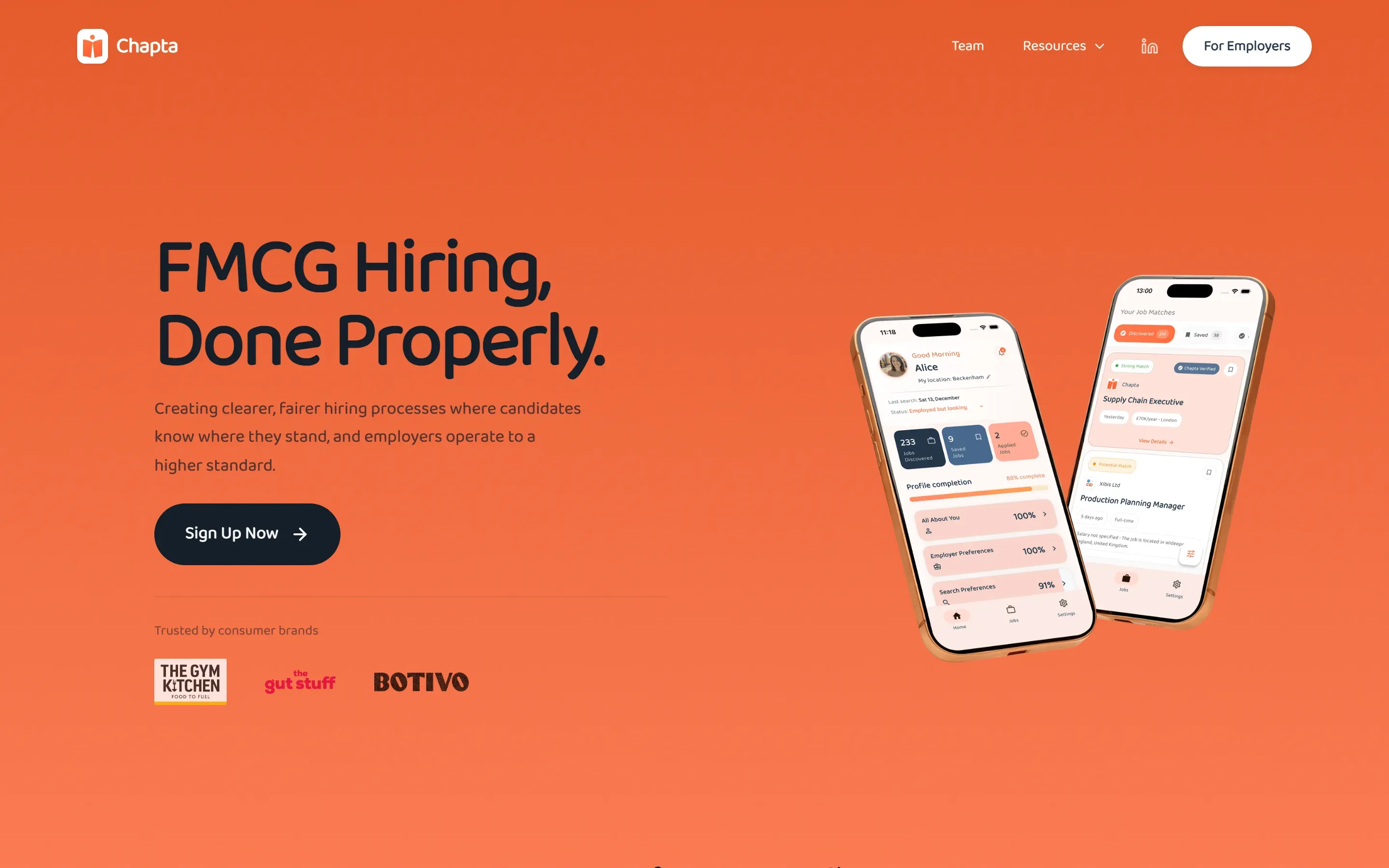 Chapta employer portal Showing the hiring team why a candidate matched A behavioural read sits alongside each match, and contact stays shut until both sides opt in. Explainable Every match arrives with its reasoning
 Secure and private, as standard
Candidate data is among the most sensitive you hold; it stays yours and never trains anyone else’s model. Private AI
ISO 27001, ISO 9001 and Cyber Essentials are certifications we hold, and we operate to UK GDPR. Your recruiters make the screening decisions, and the reason is recorded against each one.
The questions that decide it
What does an AI consultancy for UK recruitment and HR actually do?
We sit with your talent acquisition or HR team, map the workflow as it runs, and identify where AI lands first, usually screening triage, scheduling or onboarding admin. The audit names the regulatory record each workflow needs, including an audit trail and a bias-review log, before any build starts.
Will the AI replace our recruiters?
No, and the regulators would not allow it. UK GDPR requires human involvement in a hiring decision to be active rather than a rubber stamp, and the ICO has said recruitment sits inside that regime. The build takes triage, scheduling and onboarding admin off the recruiter’s desk.
How does this work with the EU AI Act?
The EU AI Act classifies recruitment and worker management as high-risk under Annex III, and puts the conformity-assessment, bias-testing and oversight duties on the employer rather than the vendor. The stand-alone deadline moved to December 2027, but the duty has not. UK firms are in scope for EU-based candidates. To see which duties reach your own systems before we talk, there is a free <a href="https://aigovernancecheck.co.uk/eu-ai-act-check/">EU AI Act applicability check</a> at AI Governance Check.
How does this work with UK GDPR and the automated-decision regime?
Hiring decisions with a significant effect on a candidate fall inside the UK automated-decision regime, which the Data (Use and Access) Act 2025 rewrote in February 2026. We build the human review so involvement is active and produce the audit trail. The DPIA stays yours, drafted with your DPO.
Can we keep candidate data in the UK or EU?
Yes. We deploy on Claude in the UK or EU region, OpenAI on Azure UK or EU, or open-weights models on a private GPU. Where the residency review demands it, inference runs on-prem. Candidate data does not have to leave a region your DPO has cleared.
Does this integrate with our ATS or HRIS?
We build against your ATS or HRIS through its API. Greenhouse, Workable, Bullhorn, Teamtailor and Tribepad, and Personio, BambooHR, HiBob, BreatheHR and Cezanne, are integration targets the audit scopes per engagement. Your recruiters keep using the console they already know.
What about liability if the AI makes a mistake in screening?
The Equality Act 2010 makes the employer the duty-holder for discrimination, and the EU AI Act puts high-risk duties on the deployer. Liability does not transfer by buying a product. We build the audit trail, the bias-review log and the human checkpoint that let you defend the work.
How is a recruitment or HR engagement structured?
Most engagements open with the AI Audit, with scope, fee and schedule agreed in your proposal. A build that follows puts the work live on your ATS and HRIS with the team trained on it, and an AI Implementation engagement can carry the bias-review cadence afterwards.
What does this cost for a mid-market recruitment or HR function?
The audit is £10,000 excluding VAT at standard scope, agreed before the work starts. An AI Charter can be added for a further £3,000 excluding VAT, scope agreed separately. An AI Implementation engagement is from £5,000 a month excluding VAT. We share indicative figures on a call.
What makes OpenKit different from HireVue, Eightfold, Beamery or Paradox?
The productised vendors are mostly US-built and are retrofitting EU AI Act evidence onto existing models. We build with the conformity-assessment evidence, the bias-review log and the human checkpoint in place from the first sprint, against your ATS and your fairness baseline. The recruiter is the decision-maker.
What could your business do with AI?
Find out with experts who become part of your team. We uncover opportunities, get ideas working, and help your people build on the results. We reply within one working day.