

AI for schools and trusts
Marking support built with the DfE, with admin work alongside it and the teacher confirming every grade.
What AI can do in a school week
AI earns its place on the jobs that come round every week and run against a scheme the school already has: marking a class set, drafting reports from the term’s marks, adapting resources across reading levels, and turning attendance data into letters home.
How we engage with schools
Most engagements start with the AI Audit, with scope and fee agreed before the work starts. Some schools then continue with an AI Implementation engagement to deliver the roadmap, while others commission a bespoke build.
- AI Audit We measure where the evenings go and hand back:
- Executive summary
- Interview and findings report
- Implementation roadmap and training plan
- Costing and benefit assessment
- AI Implementation We implement the priorities you agree inside a defined delivery allocation, building the plan into the school’s week and training the staff who run it. from £5,000 a month
- AI Charter It writes down what AI is used for in the school and who owns each workflow it touches. optional, +£3,000
Implementing the plan is a separate decision. What goes live in Classroom or Teams is measured against the evenings the audit counted.
The AI readiness check is free, and it tells you whether an audit is worth your term.
Where schools like yours start
It marks the class set against your own scheme and shows the reasoning behind each grade.
It drafts each report from the term’s marks and notes, in the school’s own format.
It adapts the materials you already have across reading levels and drafts the variants a class needs.
It turns attendance data into the letters that go home and files what it sent.
It works inside Google Classroom and Microsoft Teams, so nobody signs into a separate system.
Teachers get their evenings back from the marking, and every class set meets the same standard. The material you already have gets easier to find.
The audit works out yours.
Related work
Rubrical is our own platform, built with the Department for Education, and CodeKit is the AI programming tutor we built for Wolsingham School in County Durham.
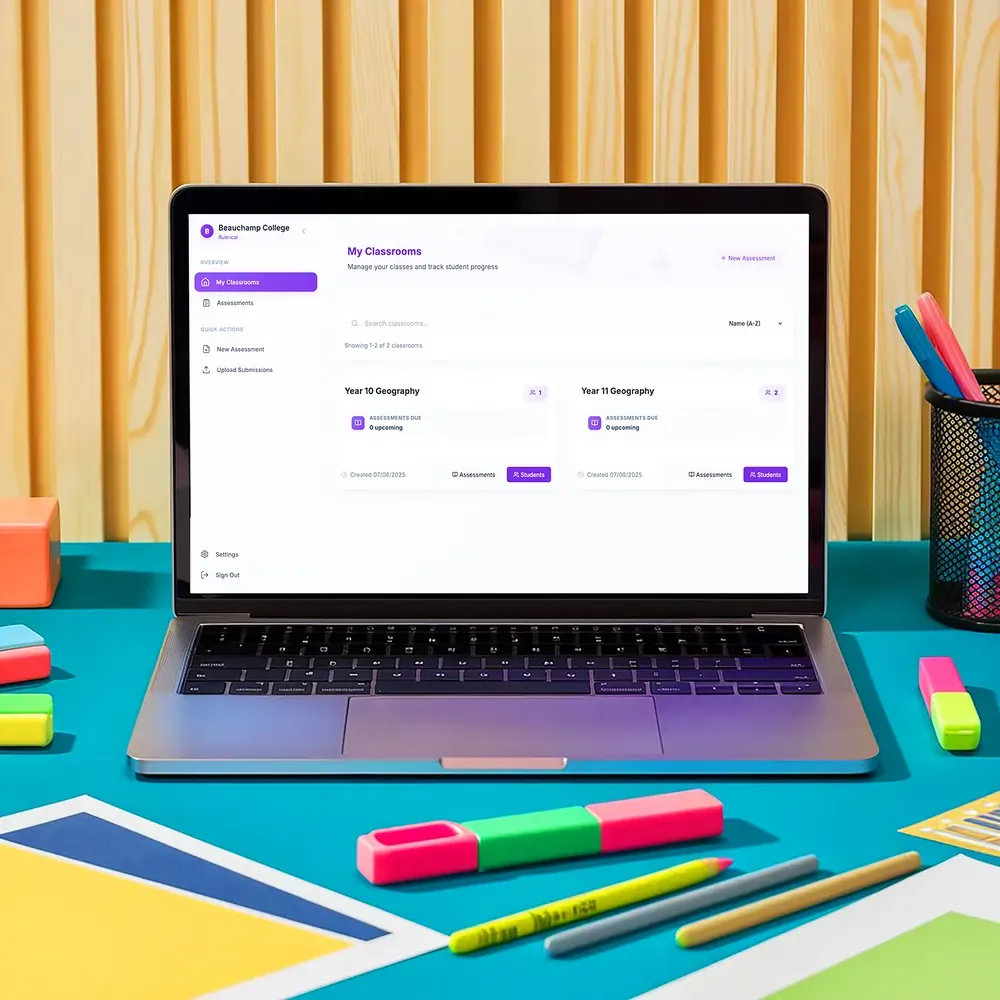 Rubrical Marking a class set against the school’s own mark scheme Built with the Department for Education and live in fourteen schools. Every draft shows the criteria it marked against, and the teacher confirms or overrides each grade before it reaches a student. 52% Less marking time
 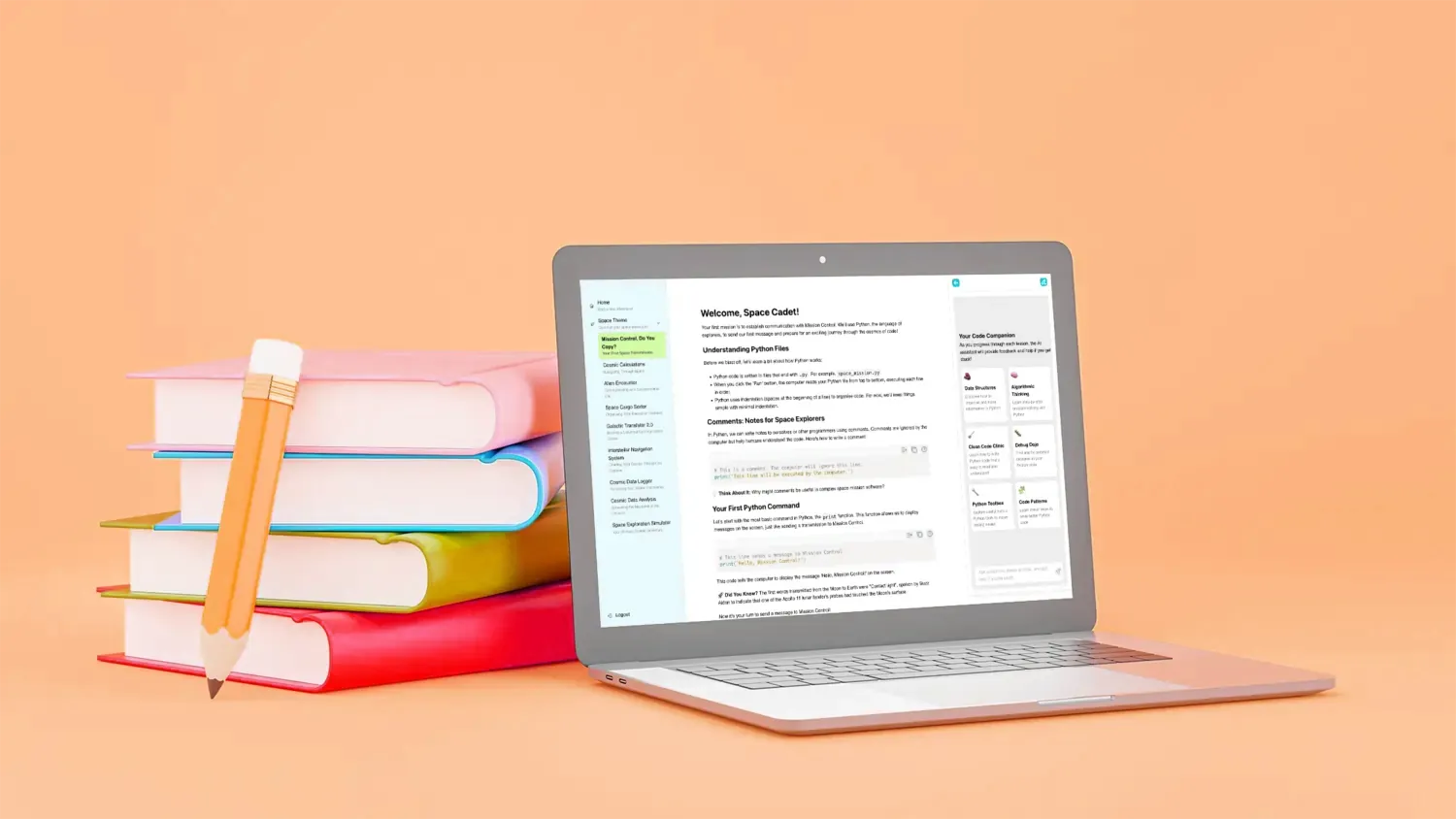 CodeKit Coaching a student through Python in the browser, on the school’s own lessons It reviews what a student has written and comes back with feedback and a next step to try, rather than handing back the answer. CodeKit became the basis of our bid when the Department for Education opened a competition for AI tools in education, and we won the first phase. Pro bono For Wolsingham School
 The Department for Education records that figure on page 98 of its schools white paper, Every child achieving and thriving (February 2026), alongside the Department’s initial £1m award to Rubrical in 2024 and a further £1m from Innovate UK.
Secure and private, as standard
Every automated step leaves a record the school can stand behind, and pupil data never leaves to train another model. Private AI
ISO 27001, ISO 9001 and Cyber Essentials are certifications we hold, and we operate to UK GDPR, pupil data included.
The questions that decide it
School leaders ask us these before they let anything near a mark.
What does an AI consultancy for UK schools actually do?
We run an AI Audit of where AI fits in a school or trust. You get a findings report, a prioritised roadmap and a costed business case. What follows is built on the school’s own mark schemes, and staff are trained to use it inside Classroom or Teams.
Will AI replace teachers?
No, and the DfE product safety standards require AI tools to mitigate cognitive deskilling. The workflows that earn their place are marking first passes, lesson planning support, parent communications and admin triage. The EEF study found teachers saved around 31% of planning time and still owned every plan.
How does this work with the DfE Generative AI product safety expectations?
The DfE turned its expectations into formal product safety standards on 19 January 2026, covering content filtering, distress detection, cognitive deskilling, manipulation defences and a ban on training with learner or teacher work. We design against the standards, document the alignment, and hand it to your DSL and DPO.
What about JCQ and exam integrity?
JCQ treats undeclared AI use in submitted work as malpractice, and recorded 1,125 GCSE and A-level disqualifications in 2025. Anything we build that touches assessed work keeps the student declaration trail intact, the teacher in the moderation loop and the evidence defensible at a JCQ inquiry.
Can we keep pupil data on-prem or in the UK?
Yes. The default is an Azure UK tenant or an equivalent UK or EU region, and on-prem is supported where sovereignty demands it. Models run behind the trust’s own identity provider, logs are kept for moderation rather than training, and the trust can export and delete everything.
Does this integrate with Google Classroom, Microsoft Teams, and our MIS?
Google Classroom and Microsoft Teams for Education are evidenced production integrations: Rubrical syncs assignments and returns grades through both. Microsoft 365 and Entra ID are standard. SIMS, Arbor or Bromcom integration is scoped per engagement, so tell us which one you run at the audit.
What happens with the EU AI Act if we deploy an assessment tool?
The EU AI Act classifies systems that evaluate learning outcomes or monitor candidates during tests as high-risk. The stand-alone compliance deadline moved to December 2027, but the classification is settled and the institution carries its own duties, including a Fundamental Rights Impact Assessment. We write that alongside the build. If you want to check which duties reach you first, there is a free <a href="https://aigovernancecheck.co.uk/eu-ai-act-check/">EU AI Act applicability check</a> at AI Governance Check.
How is an education AI engagement structured?
Most engagements open with the AI Audit, mapping where AI fits and where it should not go. Scope, fee and schedule are agreed in your proposal. Rubrical, our DfE partnership, ran from discovery to a fourteen-school rollout, and a build is scoped against what the audit surfaces.
What does it cost for a school or a MAT?
The audit is £10,000 excluding VAT at standard scope, agreed before the work starts. An AI Charter can be added for a further £3,000 excluding VAT, scope agreed separately. An AI Implementation engagement is from £5,000 a month excluding VAT. We give you indicative figures on a call.
What makes OpenKit different from Century, Sparx, Eedi, or Oak’s Aila?
Those are products you subscribe to. We start with an assessment, and the audit chooses the workflow. A build makes it work inside your stack, and we either hand over or continue through an AI Implementation engagement. We run a DfE programme-partner build in production and hold three certifications.
How does OpenKit compare to Faculty for education AI work?
Faculty, now part of Accenture, operates at enterprise scale on DfE central programmes and Big Four day rates. We work at trust scale: independent schools, multi-academy trusts of three to thirty schools, colleges and university departments. The entry point is small enough to sign off without a procurement exercise.
What could your business do with AI?
Find out with experts who become part of your team. We uncover opportunities, get ideas working, and help your people build on the results. We reply within one working day.