OpenKit AI for smart cities in South Korea
OpenKit joined the Innovate UK GBIP programme in South Korea, presenting AI solutions for smart cities at the World Smart City Expo.
 Ibrahim Mizi
· 3 min read
Updated
Ibrahim Mizi
· 3 min read
Updated 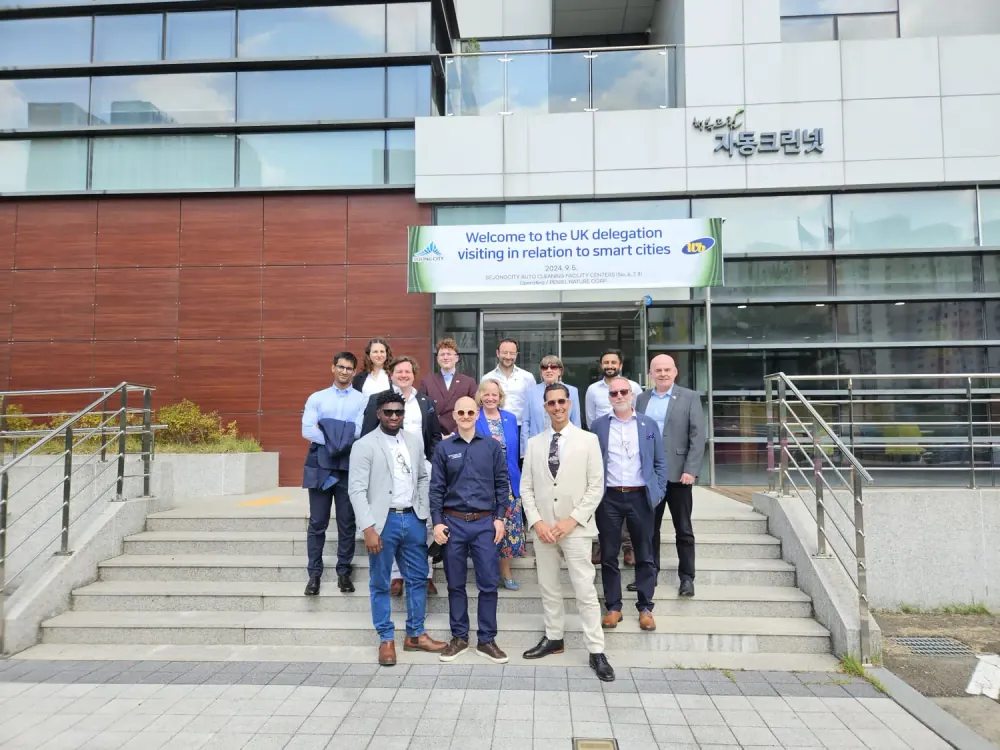
Innovate UK’s Global Business Innovation Programme
OpenKit spent a week in South Korea as part of Innovate UK’s Global Business Innovation Programme (GBIP), presenting our AI work for smart cities and meeting Korean technology institutions. This is a short account of what we showed, who we met, and what we took away.
Understanding smart cities and the role of AI
Smart cities use digital technology to run public services and infrastructure better, with the aim of improving daily life and cutting waste. AI sits at the centre of that: it analyses data from across a city and helps planners make decisions they would otherwise make on instinct.
In practice that means optimising energy and resource use, easing congestion on public transport, and supporting public safety through better monitoring. What matters is what AI lets a city do with the data it already collects: spot trends earlier and respond before a problem becomes a crisis.
World Smart City Expo
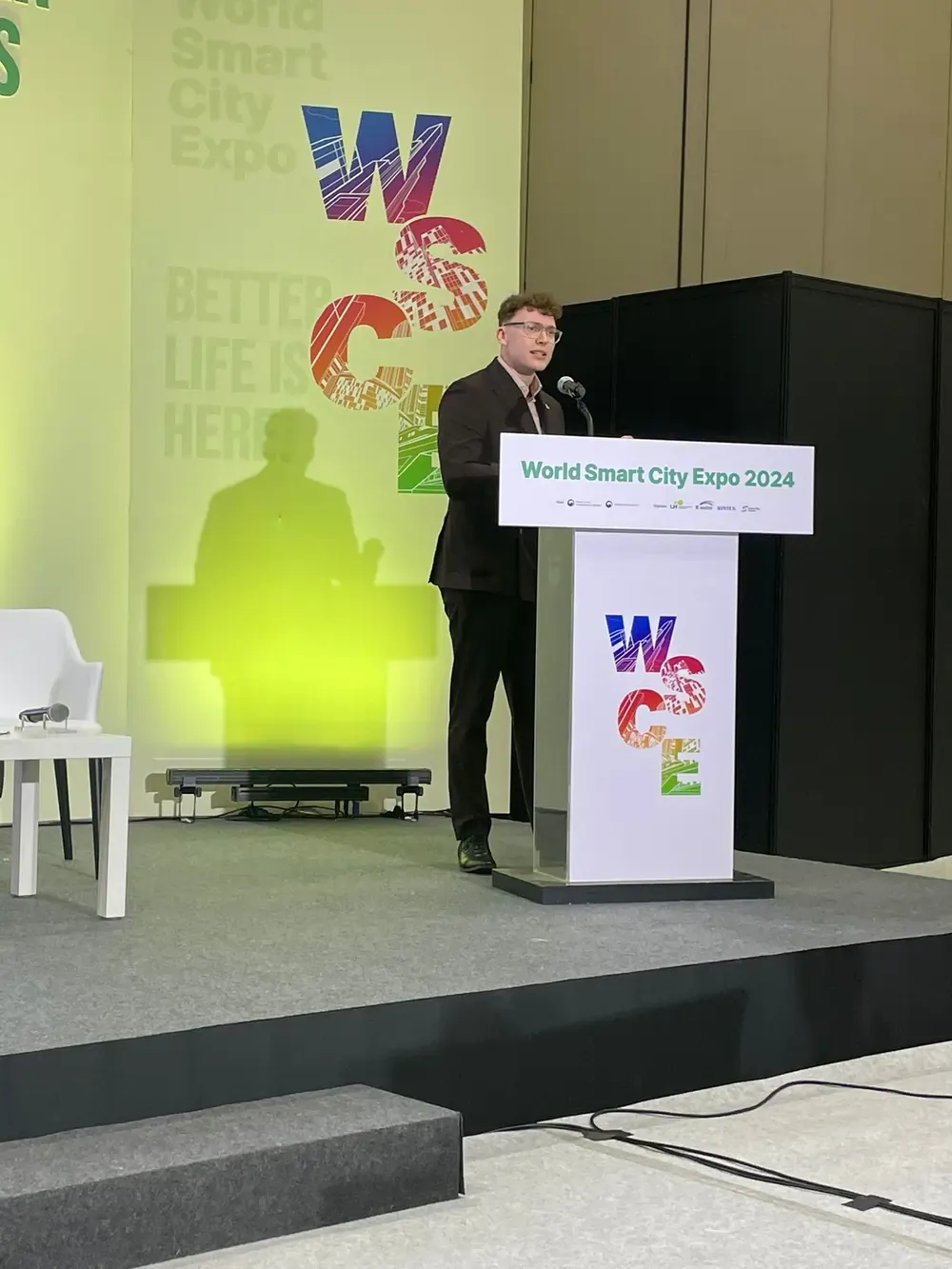
We presented at the World Smart City Expo (WSCE) at the KINTEX centre, to an audience of government officials, urban planners and international organisations.
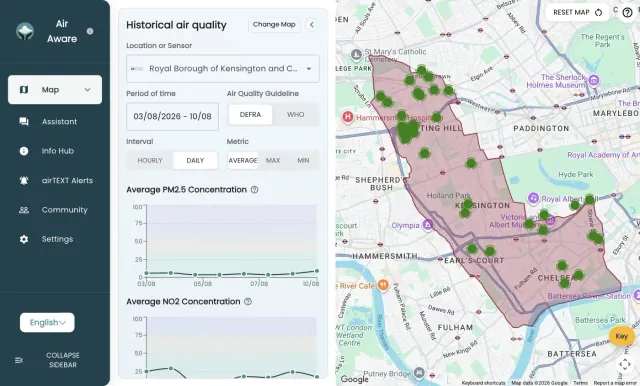
Our Air Aware platform drew the most attention. It aggregates air quality reports, research and real-time sensor data into a single interface, and London residents stay with it for an average of five minutes and two seconds a session. The presentations led to detailed conversations with officials interested in running similar systems in their own cities.
Cultural exchange and partnerships
Alongside the presentations, we spent time understanding how Korean organisations work, visiting historical sites and meeting potential partners in a less formal setting. Meetings with organisations such as SRPost opened conversations about collaboration on smart city and disaster management projects, in both Korean and British contexts.
Sejong: a working smart city
In Sejong, the Metropolitan Government hosted us at the Autonomous Driving Big Data Center, where AI runs across traffic management and environmental monitoring. At Sejong Technopark, our discussions about continuous environmental monitoring drew interest from urban planners and technologists, and the Centre for Creative Economy and Innovation showed us how Korea combines AI with urban planning at scale.
Seoul’s Smart City Center
The Seoul Digital Foundation’s Smart City Center supports Korean and international SMEs building smart city technology, from traffic management to building controls. We shared what we have learned in London on environmental monitoring, citizen-facing interfaces and urban data processing.
LG Innovations Center
The Seoul Business Agency arranged a tour of the LG Innovations Center, whose work on AI and IoT for cities lined up closely with how we think about integrated urban systems.
Looking forward
The week left us with concrete opportunities to work with Korean partners on smart city projects, particularly where British and Korean expertise combine: integrated AI across urban systems, environmental monitoring, and autonomous transport and traffic management. We are already following up on several of these with the partners we met.
Thank you to Innovate UK for the opportunity to present our work in South Korea.
OpenKit holds ISO 9001 and ISO 27001, covering quality management and information security.

Take the question to an audit.
If this raised a question about your own operation, the AI Audit is where we answer it: a findings report, a prioritised roadmap and a costed business case, from £10,000.
Keep reading
The closest pieces to this one, by shared ground.